38 kubernetes well known labels
Downward API | Kubernetes Downward API. It is sometimes useful for a container to have information about itself, without being overly coupled to Kubernetes. The downward API allows containers to consume information about themselves or the cluster without using the Kubernetes client or API server. An example is an existing application that assumes a particular well-known ... api/well_known_labels.go at master · kubernetes/api · GitHub LabelHostname = "kubernetes.io/hostname" LabelTopologyZone = "topology.kubernetes.io/zone" LabelTopologyRegion = "topology.kubernetes.io/region" // These label have been deprecated since 1.17, but will be supported for // the foreseeable future, to accommodate things like long-lived PVs that // use them. New users should prefer the "topology ...
How To Use Let's Encrypt on Kubernetes to Automatically Generate Certs It can be complicated to set up, but Let's Encrypt helps solve this problem by providing free SSL/TLS certificates and an API to generate these certificates. Kubernetes allows you to define your application runtime, networking, and allows you to define your infrastructure declaratively through code; making it easier to maintain, review, and ...
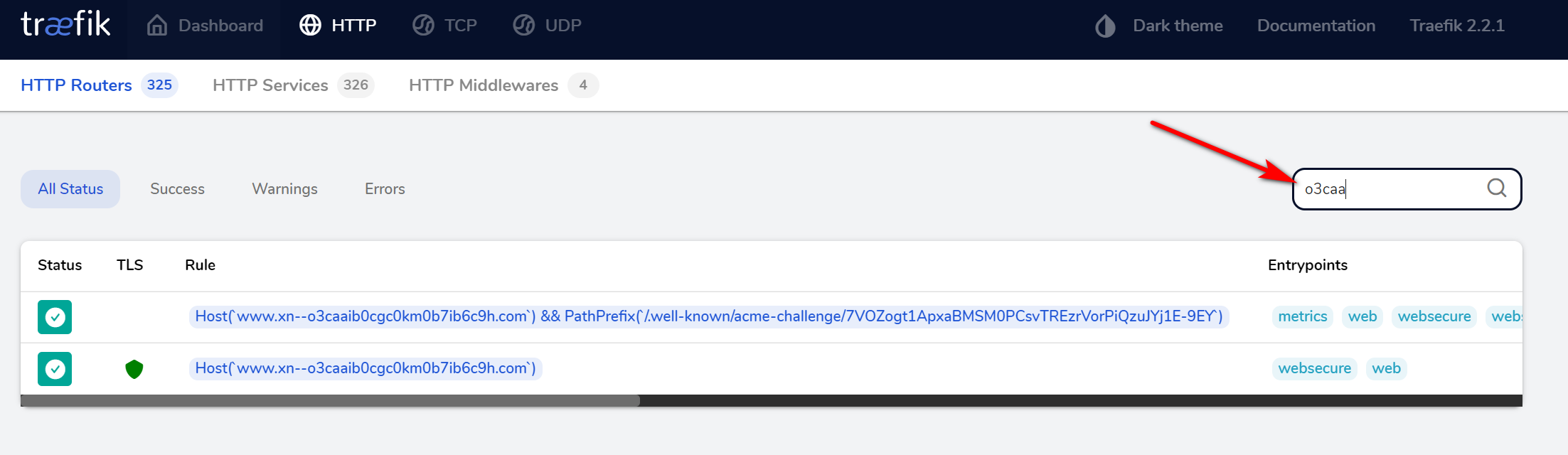
Kubernetes well known labels
Use labels in an Azure Kubernetes Service (AKS) cluster - Azure ... For additional reserved prefixes, see Kubernetes well-known labels, annotations, and taints. Deprecated labels. The following labels are planned for deprecation with the release of Kubernetes v1.24. Customers should change any label references to the recommended substitute. Label kubernetes/well_known_labels.go at master - GitHub LabelHostname = "kubernetes.io/hostname" LabelTopologyZone = "topology.kubernetes.io/zone" LabelTopologyRegion = "topology.kubernetes.io/region" // These label have been deprecated since 1.17, but will be supported for // the foreseeable future, to accommodate things like long-lived PVs that // use them. New users should prefer the "topology ... Documentation | Karpenter These can be arbitrary labels you define, Kubernetes well-known labels, or Karpenter labels. Node affinity (NodeAffinity): Set nodeAffinity to have the Pod run on nodes that have matching nodeSelectorTerms set or not set. Matching affinity can be a particular operating system or zone. You can set the node affinity to be required or simply ...
Kubernetes well known labels. Clarification of labels, annotations and taints #25860 - GitHub There are several categories of things listed on the "Well-known labels, annotations and taints" page, however the content is very fuzzy. I cannot tell which one is a label, which one is an annotation; The page has no "taints" at all; Some of the labels are tagged as "deprecated", but that is not accurate. Some of the labels are already removed. Pod placement - CAST AI Documentation This guide will show how to place pods in particular node, zone, region, cloud, etc., using labels and advanced Kubernetes scheduling features. Kubernetes supports this by using: Node selector; Node affinity and anti-affinity ... kubernetes.io/arch and beta.kubernetes.io/arch: well-known: Node CPU architecture: amd64: node.kubernetes.io ... Object Names and IDs | Kubernetes Each object in your cluster has a Name that is unique for that type of resource. Every Kubernetes object also has a UID that is unique across your whole cluster. For example, you can only have one Pod named myapp-1234 within the same namespace, but you can have one Pod and one Deployment that are each named myapp-1234. For non-unique user-provided attributes, Kubernetes provides labels and ... Etiquetas recomendadas | Kubernetes Puedes visualizar y gestionar los objetos de Kubernetes con herramientas adicionales a kubectl y el propio tablero de control. Un conjunto común de etiquetas permite a dichas herramientas trabajar de forma interoperable, describiendo los objetos de una forma común que todas las herramientas puedan entender. Además del soporte a herramientas, las etiquetas recomendadas describen las ...
Well-Known Labels, Annotations and Taints | Kubernetes Well-Known Labels, Annotations and Taints. Kubernetes reserves all labels and annotations in the kubernetes.io namespace. This document serves both as a reference to the values and as a coordination point for assigning values. Concepts | Karpenter Well-known labels: The provisioner can use well-known Kubernetes labels to allow pods to request only certain instance types, architectures, operating systems, or other attributes when creating nodes. See Well-Known Labels, Annotations and Taints for details. Keep in mind that only a subset of these labels are supported in Karpenter, as ... AWS Releases Multi-Cloud Kubernetes Autoscaler Karpenter The provisioner can also be set up to use Kubernetes well-known labels to allow pods to request only specific instances based on instance types, architectures, or zones. Recommended Labels | Kubernetes You can visualize and manage Kubernetes objects with more tools than kubectl and the dashboard. A common set of labels allows tools to work interoperably, describing objects in a common manner that all tools can understand. In addition to supporting tooling, the recommended labels describe applications in a way that can be queried. The metadata is organized around the concept of an application.
Kubernetes: Evenly Distribution of Pods Across Cluster Nodes In order to distribute pods evenly across all cluster worker nodes in an absolute even manner, we can use the well-known node label called kubernetes.io/hostname as a topology domain, which ... Just-in-Time Kubernetes: Namespaces, Labels, Annotations, and ... - Medium Well, we don't actually create Pods directly in Kubernetes either (we can, but we don't). Instead, we create Deployments . A Deployment manages pod creation, and serves as a wrapper around a Pod . Etiquetas y Selectores | Kubernetes Las etiquetas son pares de clave/valor que se asocian a los objetos, como los pods. El propósito de las etiquetas es permitir identificar atributos de los objetos que son relevantes y significativos para los usuarios, pero que no tienen significado para el sistema principal. Se puede usar las etiquetas para organizar y seleccionar subconjuntos de objetos. Las etiquetas se pueden asociar a los ... Best Practices Guide for Kubernetes Labels and Annotations The hidden gem of Kubernetes labels is that they are heavily used with the Kubernetes itself, such as scheduling pods to nodes, managing replicas of deployments, and network routing of services. ... Kubernetes reserves all the labels and annotations with the key kubernetes.io domain name and keeps a list of well-known ones in the official ...
Dealing with stalled Certificate
Reorganize the "Well-Known Labels, Annotations and Taints ... - GitHub The Well-Known Labels, Annotations and Taints reference page is a bit messy at the time. The annotations are not all harmonized with the same template. ... Also, new annotations in the kubernetes.io namespace are not targeting Kubernetes API objects. For example, annotations on the audit logs Event (from the audit.k8s.io/v1 API), ...
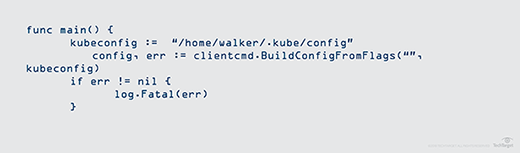
Follow a Kubernetes and Go tutorial in your home lab
Labels and Selectors | Kubernetes Labels are key/value pairs that are attached to objects, such as pods. Labels are intended to be used to specify identifying attributes of objects that are meaningful and relevant to users, but do not directly imply semantics to the core system. Labels can be used to organize and to select subsets of objects. Labels can be attached to objects at creation time and subsequently added and ...

Kubernetes学习之Labels、Namespace - 灰信网(软件开发博客聚合)
EDB Docs - EDB Postgres for Kubernetes v1 - Scheduling Pod affinity and anti-affinity. Kubernetes allows you to control which nodes a pod should (affinity) or should not (anti-affinity) be scheduled, based on the actual workloads already running in those nodes.This is technically known as inter-pod affinity/anti-affinity.. EDB Postgres for Kubernetes by default will configure the cluster's instances preferably on different nodes, resulting in the ...

azure-docs/use-labels.md at main - GitHub For additional reserved prefixes, see Kubernetes well-known labels, annotations, and taints. Deprecated labels. The following labels are planned for deprecation with the release of Kubernetes v1.24. Customers should change any label references to the recommended substitute.

Special View for certain Well known Labels and Annotations #5088 What would you like to be added: Special UI to display the values from well-known labels and annotations from Kubernetes. Here is the official list of them:

What Kubernetes Resources to use when | Better Programming
Use availability zones in Azure Kubernetes Service (AKS) - Azure ... As documented in Well-Known Labels, Annotations and Taints, Kubernetes uses the topology.kubernetes.io/zone label to automatically distribute pods in a replication controller or service across the different zones available. In order to test this, you can scale up your cluster from 3 to 5 nodes, to verify correct pod spreading:

@padabala/react-native-calendar-events - npm package | Snyk
Incorrect example format on 'Well-Known Labels, Annotations and Taints ... This is a Bug Report: is correct for YAML, which I think is what we should assume we're writing a snippet of (it's definitely not JSON). I'd use = here and then file another issue about making the switch to YAML format.. Originally posted by @sftim in #32923 (comment). Problem: The Example for each item on the Well-Known Labels, Annotations and Taints uses is intended to be YAML (I believe ...
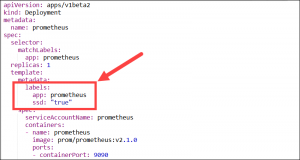
19 Kubernetes Best Practices for Efficient Clusters | PhoenixNAP
Deploy a sample application - Amazon EKS For more information, see Well-Known Labels, Annotations and Taints in the Kubernetes documentation. The kubernetes.io/os: linux nodeSelector means that if you had Linux and Windows nodes (for example) in your cluster, the image would only be deployed to Linux nodes.

Document addonmanager.kubernetes.io/mode label #29189 This is a Feature Request What would you like to be added Update Well-Known Labels, Annotations and Taints to mention and document the label addonmanager.kubernetes.io/mode Why is this needed https...

Labels annotations taints - Unofficial Kubernetes Kubernetes reserves all labels and annotations in the kubernetes.io namespace. This document describes the well-known kubernetes.io labels and annotations. This document serves both as a reference to the values, and as a coordination point for assigning values. Table of contents: Well-Known Labels, Annotations and Taints; beta.kubernetes.io/arch
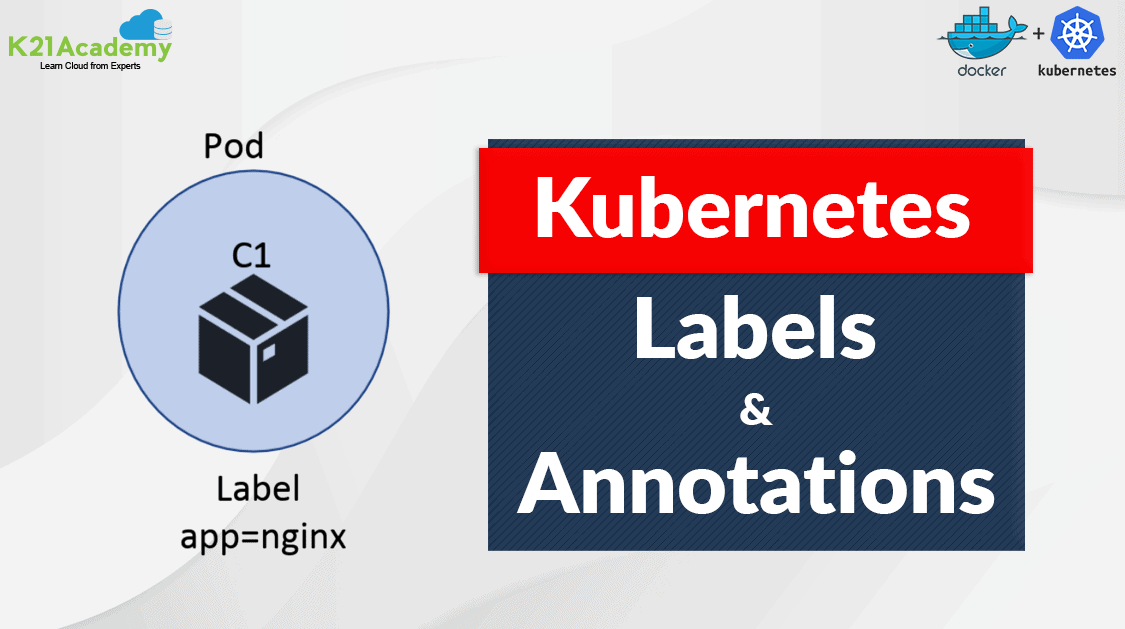
Kubernetes Labels | Labels And Annotations In Kubernetes
Documentation | Karpenter These can be arbitrary labels you define, Kubernetes well-known labels, or Karpenter labels. Node affinity (NodeAffinity): Set nodeAffinity to have the Pod run on nodes that have matching nodeSelectorTerms set or not set. Matching affinity can be a particular operating system or zone. You can set the node affinity to be required or simply ...

kubernetes/well_known_labels.go at master - GitHub LabelHostname = "kubernetes.io/hostname" LabelTopologyZone = "topology.kubernetes.io/zone" LabelTopologyRegion = "topology.kubernetes.io/region" // These label have been deprecated since 1.17, but will be supported for // the foreseeable future, to accommodate things like long-lived PVs that // use them. New users should prefer the "topology ...

Use labels in an Azure Kubernetes Service (AKS) cluster - Azure ... For additional reserved prefixes, see Kubernetes well-known labels, annotations, and taints. Deprecated labels. The following labels are planned for deprecation with the release of Kubernetes v1.24. Customers should change any label references to the recommended substitute. Label
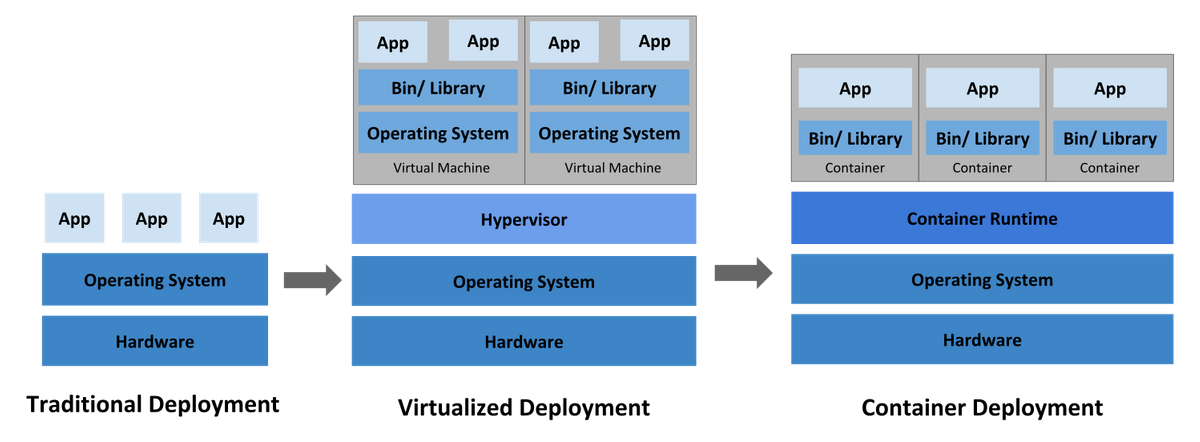
Kubernetes in SIMPLE WORDS | Nimbella.com® | Nimbella.com®

Kubernetes basics and hands on exercise
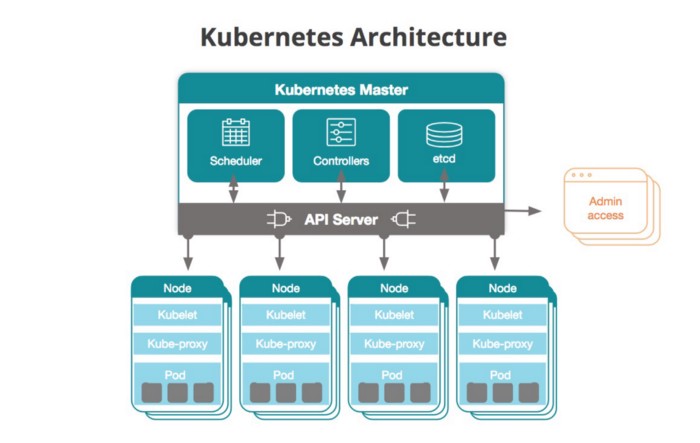
What does Kubernetes actually do and why use it

Preserve Kubernetes API Objects While They Are in Use | IBM
Post a Comment for "38 kubernetes well known labels"